

Hi Gardening and Wellness Friends 👋🏼
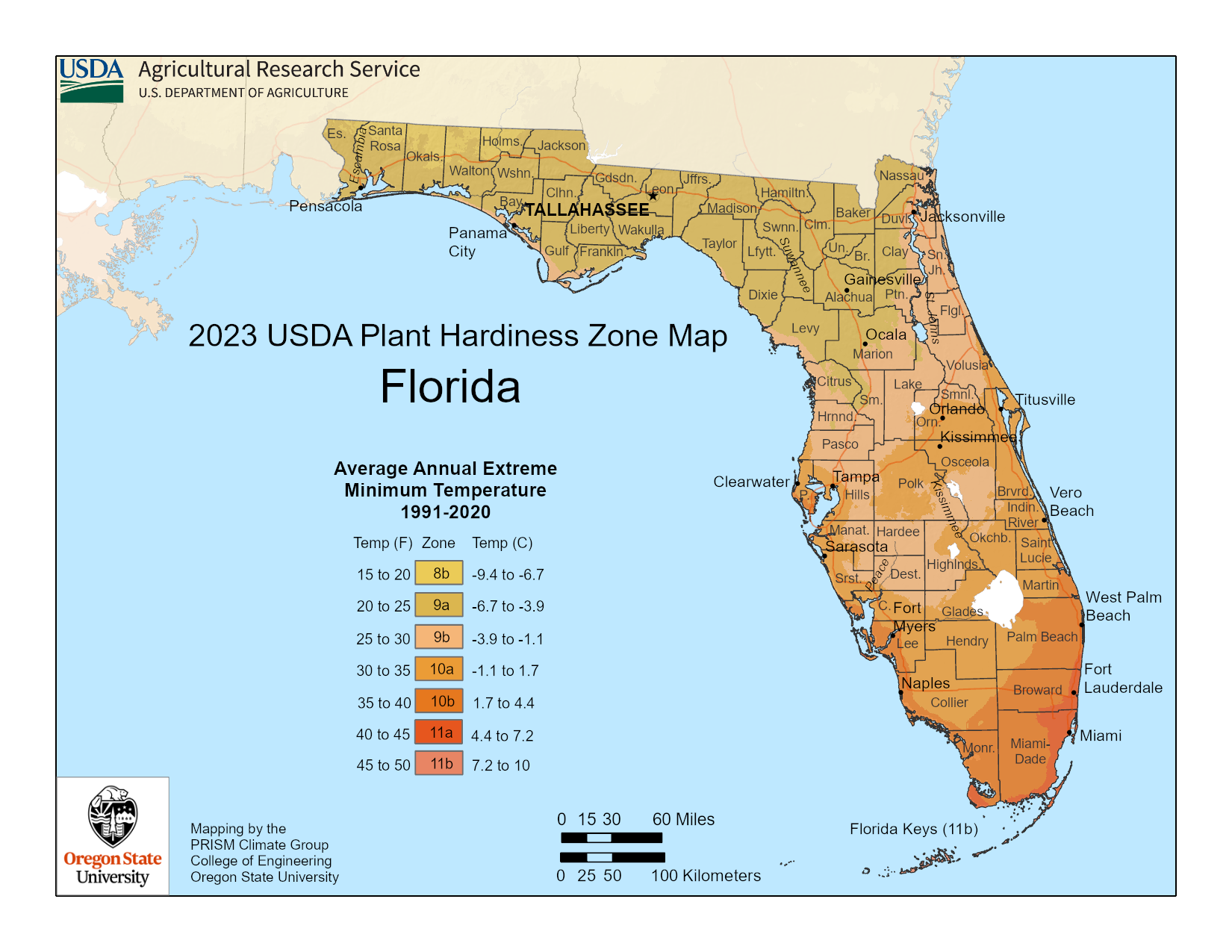
Here is a map of our growing zones. If you’re in North FL you’re zones 8a and 9a, Central FL you’re zones 9b and 10a while South FL you’re zones 10b, 11a and 11b
Photo from USDA
We’re extremely blessed to be able to plant year round in Florida. Aside from learning what to grow in the heat of a Florida summer, the other challenge is learning to protect our winter crops if we have freezing temperatures. That brings me to another blessing- Florida doesn’t see freezing temperatures every winter, but it’s important to know how to protect our garden if we face one.
In the first part of this three part series, we’ll learn about our growing zones and our frost dates in our Florida gardens. We have the growing zone we garden in based on where we are located in the state. The growing zone is defined by the average annual minimum winter temperature. This helps predict which plants can survive the cold in the specific zone. The map can be seen above. Notice the map key. It shows us the average minimal temperature based on the color coded zone on the map. The average low temperature gets down to 15 degrees F in the northern panhandle while the low temperature in the southern keys gets down to 45 degrees F. What a huge temperature difference from the top of the state down to the bottom of the state. You can imagine the ability to grow different crops in the winter in south Florida compared to north Florida.
Now, find where you’re located in the state. Use the color coded chart to determine which zone you’re located in on the map. Next we’ll find our first and last frost dates. These dates are based on the past 30 years of averages, and they estimate when we will see the temperature dip to or below freezing for the first time in the season and the average date we last see the temperatures dip to or below freezing for the season. This date is different depending on where in Florida we’re located.
Determine which growing zone you’re located in and then reference the below chart to see when your first and last frost dates are. If you’d rather not use these resources, you can also use the Farmer’s Almanac and enter your zip code. It will provide the average first and last frost dates.
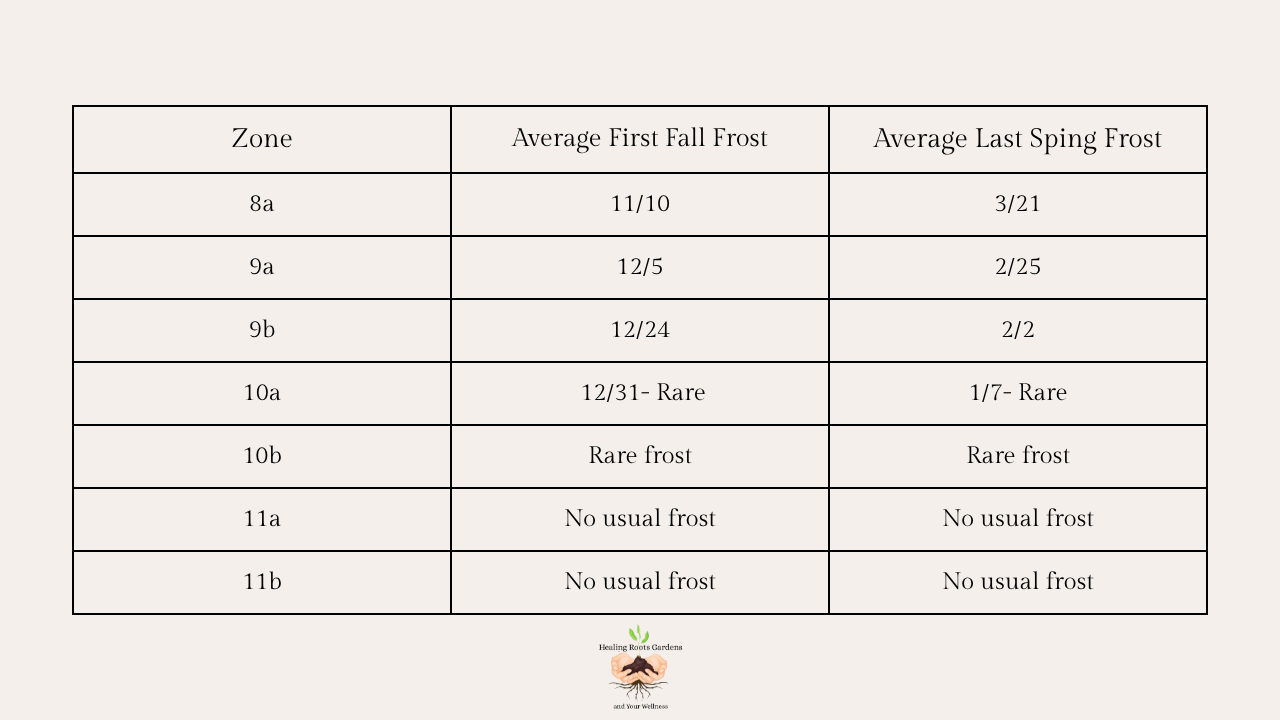
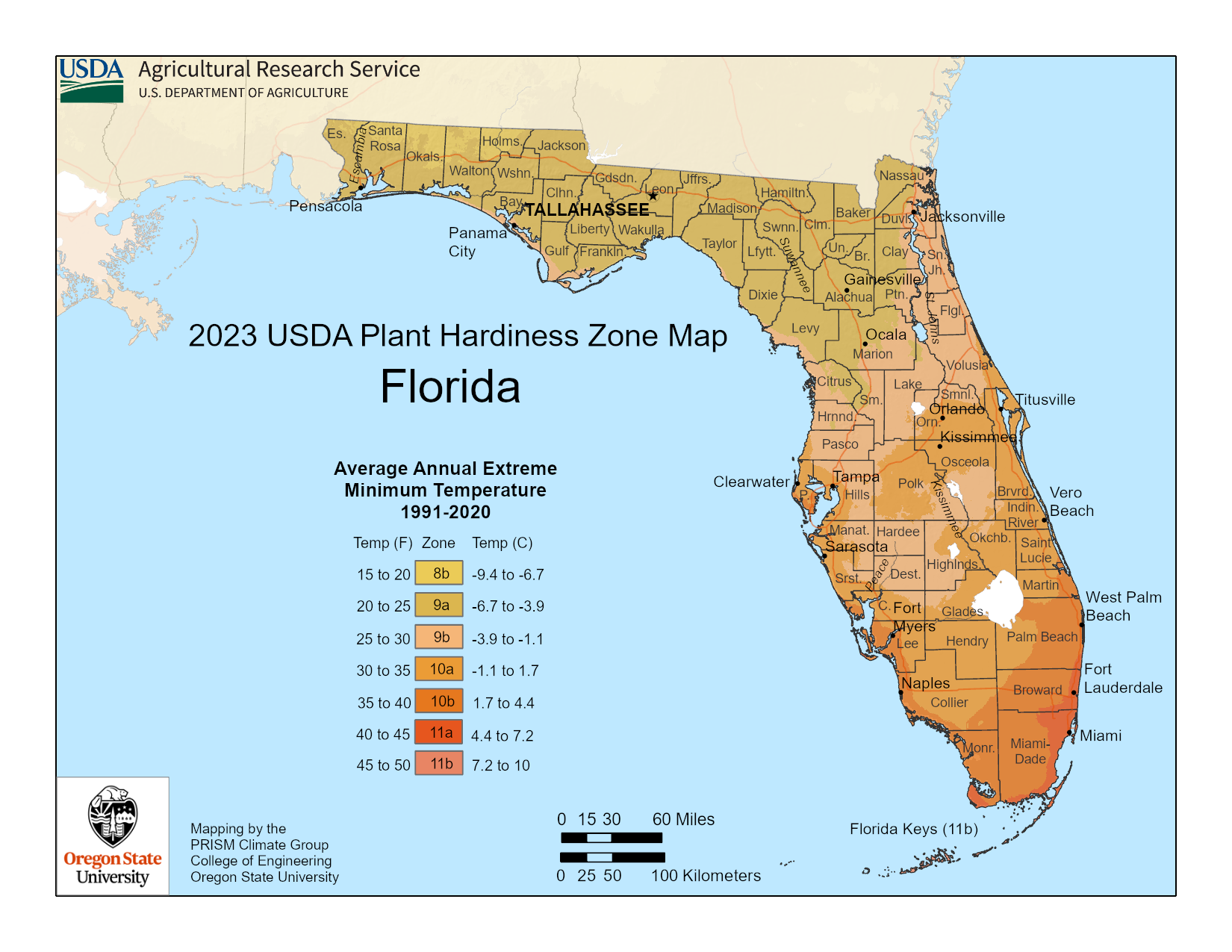
Average first and last frosts based on our growing zones. Look at the map at the top to see which zone you’re located in
It’s important to have an idea of when we may see frost so we can prepare our gardens for the lower temperatures. These estimates can vary by two weeks. Meaning if your first frost date average is November 10th, then the first frost could be two weeks before the estimated date up to two weeks after the estimated date. These estimates give us an idea of when we should be preparing the gardens if we are to anticipate a freeze.
Next week we’ll look at what we can do to prepare our beds before a freeze comes.
If you have questions, message through social media or email. I’m happy to support our gardens and our bodies.
Until next time…..
🌿To our health and the health of our gardens🌿
Tina